


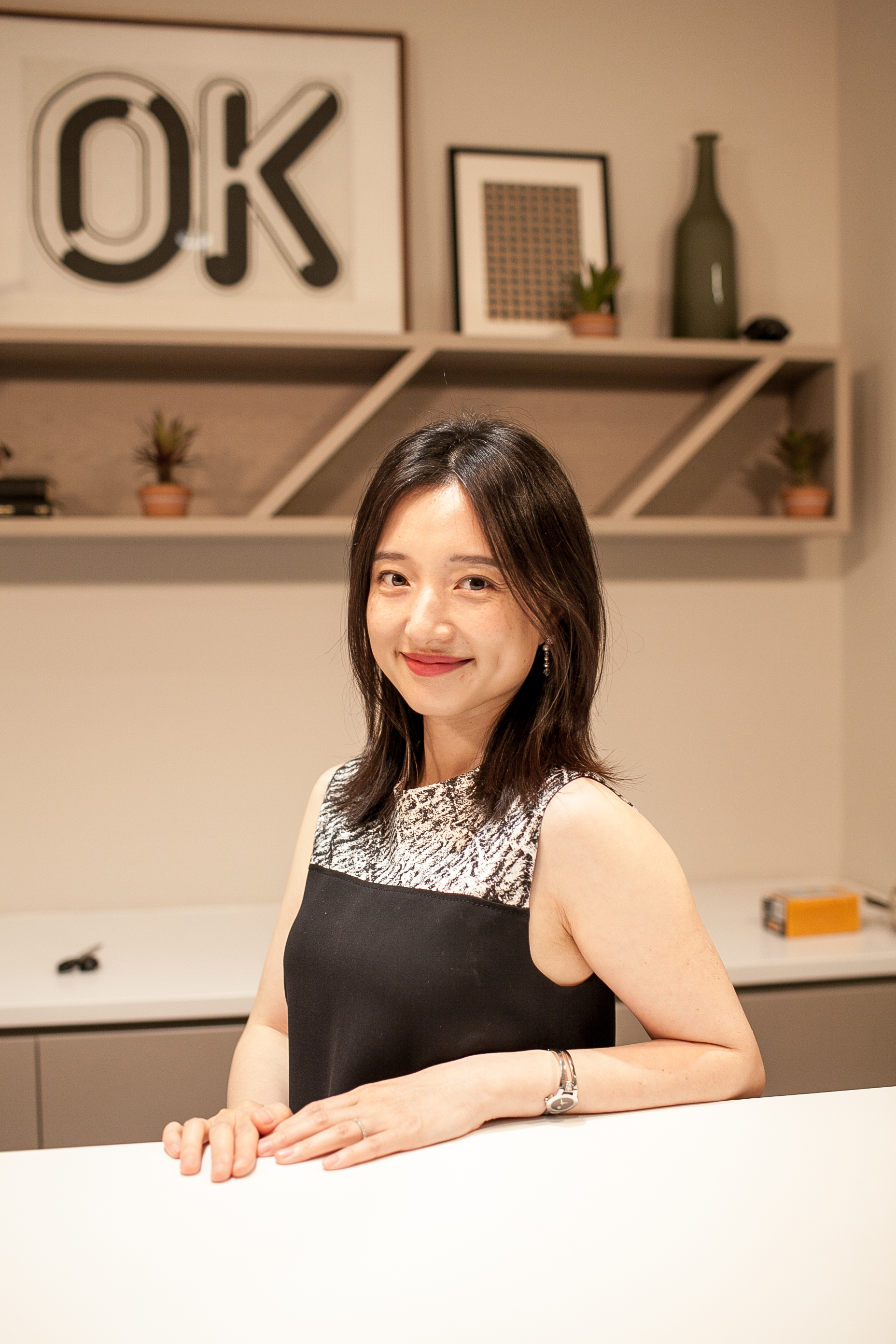
There is a quiet confidence about Christina Chen that becomes unmistakable within minutes of conversation. Untouched by the theatrics that often surround artificial intelligence, she is grounded, deliberate and focused on building something that matters. As CEO and Founder of First AI Group, she operates at the centre of one of the fastest-moving sectors in business, yet her attention remains firmly on what happens when companies try to use AI in the real world.
Her interest in technology started early, long before generative models and boardroom buzzwords became part of everyday language. One of her clearest childhood memories is watching a television programme that showed a fridge capable of detecting when milk was running low. “I remember thinking, I want to build that,” she says. That moment stayed with her, later leading her to study computer science, drawn not just to the engineering itself, but to what it made possible, from facial recognition at border control to machine learning decoding the human genome. More than the code, it was the imagination behind it that captivated her.
Chen’s career path was anything but linear. She began as a software engineer, taking on internships where the work was far from glamorous, fixing printers, troubleshooting routers and learning how systems behave when they break. Alongside the technical work, she developed a growing appetite for understanding how ideas turn into products and how businesses actually function.
At a time when venture capital in the UK was largely inaccessible to young technologists, she created her own door. Armed with nothing more than the Financial Times and relentless persistence, she cold-emailed investment firms asking for opportunities. Most never replied. Some rejected her outright. Eventually, one said yes, and that moment proved pivotal.
“I wanted to understand how companies are born, funded and scaled,” she explains. “What happens behind the scenes of the startups that become the next Google or Facebook.” That exposure to early-stage growth revealed the structural gaps that sit between technical possibility and real-world adoption, insights that would later shape her own company.
Entrepreneurship, however, had always existed quietly in the background. Chen kept notebooks filled with business ideas and regularly found herself sketching concepts over coffee with friends. But the shift came when she stopped treating those conversations as hypothetical. “The real change happens when you stop talking and start building,” she says.
First AI grew out of that moment and out of a problem Chen kept seeing repeatedly. While organisations were investing heavily in AI tools, many struggled to use them effectively. The limitation, she realised, wasn’t the technology itself. It was the shortage of people capable of bridging technical capability and business reality.
Her response was to build a pipeline rather than a traditional consultancy model. First AI recruits high-potential graduates and early-career professionals, trains them through its Generative AI Graduate Programme, and embeds them directly inside organisations as AI Adoption Managers and engineers. The aim is not dependency, but transfer, building in-house capability that remains long after projects end.
“Technology alone doesn’t drive change,” Chen says. “People do.”
That philosophy has shaped the company’s growth. Timing helped, as demand for AI talent surged, but relevance mattered more. First AI scaled because it addressed a problem companies were actively struggling with.
One of the firm’s most telling projects involved a global law firm that had invested in AI tools but saw little usage across teams. By embedding an AI Adoption Manager inside the organisation, mapping internal workflows and building bespoke AI agents to automate repetitive tasks such as document summarisation and clause extraction, adoption increased more than tenfold within months. Lawyers began saving hours each week. More importantly, scepticism gave way to engagement.
For Chen, moments like these carry as much weight as commercial milestones. So too does the development of the people inside her own company. First AI is often the first serious employer for graduates entering AI careers. Watching them gain confidence, responsibility and momentum is, she says, one of the most rewarding aspects of the role.
Becoming a mother added another dimension to her leadership. “It changed how I see time and growth,” she reflects. “Building a company is important, but it’s not the only thing that matters.” The experience has brought a deeper patience with people, with progress and with herself.
.jpg)
As an immigrant founder from a Chinese background, Chen is acutely aware of how underrepresented many groups remain within AI leadership. For much of her career, she was often the only woman in the room and frequently the only woman of colour. That reality now informs how she builds teams.
At First AI, diversity is not positioned as a side initiative. Recruitment pathways are designed to be accessible. Responsibility is given early. Many of the company’s strongest performers today are women entering their first AI roles, not through quotas, but because the environment is structured to support growth.
In a sector defined by constant change, Chen is pragmatic about uncertainty. She encourages founders and business leaders to begin before they feel fully ready, to iterate quickly and to avoid waiting for perfect conditions that rarely arrive.
Looking ahead, her ambition is global. She wants First AI operating across borders, supporting organisations and graduates internationally, not simply to grow the business, but to extend access to AI capability beyond traditional talent pools.
When asked about legacy, Chen doesn’t speak in terms of exits or headlines. She points instead to the people whose careers began inside First AI. “If we’re remembered for opening doors and creating real opportunity,” she says, “that’s something I’d be proud of.”
Away from work, she keeps things simple. Time in nature with family. Gratitude rituals. Sleep, unapologetically cherished. For someone helping shape the future of work, staying human remains one of the most powerful anchors of all.
.jpg)


.jpg)


